Wrist pain and carpal tunnel syndrome

Carpal Tunnel Syndrome: Why Your Fingers Tingle and Why the Wrist Isn't the Whole Story
You wake at night with a numb, tingling hand and shake it until the feeling comes back. During the day, the thumb, index and middle fingers go numb while you hold your phone, drive or dry your hair. Buttons and earrings become fiddly, and sometimes you drop things.
These are typical signs of carpal tunnel syndrome, one of the most common nerve problems in the arm. It affects women about three times more often than men and is common in pregnancy, after birth, in people with diabetes or thyroid conditions, and in those whose work involves long hours of typing, gripping or repetitive hand use.
What happens at the wrist
The carpal tunnel is a narrow passage on the palm side of the wrist, formed by the small wrist bones and a strong band of tissue across the top. Through it run nine tendons and the median nerve, which supplies sensation to the thumb, index, middle and half of the ring finger.
When pressure inside the tunnel rises, the nerve's blood supply is reduced and it becomes irritated. Pressure increases when the wrist is bent forward or back for long periods, which is why symptoms are often worse at night, when many people sleep with their wrists curled, and during activities like phone use and driving. Fluid retention in pregnancy has the same effect.
The nerve's whole journey
The median nerve doesn't start at the wrist. It begins at the neck, passes between the neck muscles and under the collarbone, runs beneath the chest muscles and through the armpit, crosses the elbow and travels down the forearm.
Nerves need to glide as the arm moves, and they need good blood flow along their whole length. When tissues are stiff at any point, such as a tight neck from desk work, tension at the front of the chest or a restricted forearm, the nerve becomes more sensitive. It then reacts more strongly to pressure at the wrist. This is one reason why treating the wrist alone can bring only partial relief, and why people with neck problems are more likely to develop carpal tunnel symptoms.
How physiotherapy can help
Treatment depends on the severity and on what the assessment finds along the whole arm:
Night splinting: a splint that keeps the wrist in a neutral position overnight is a well-supported first step.
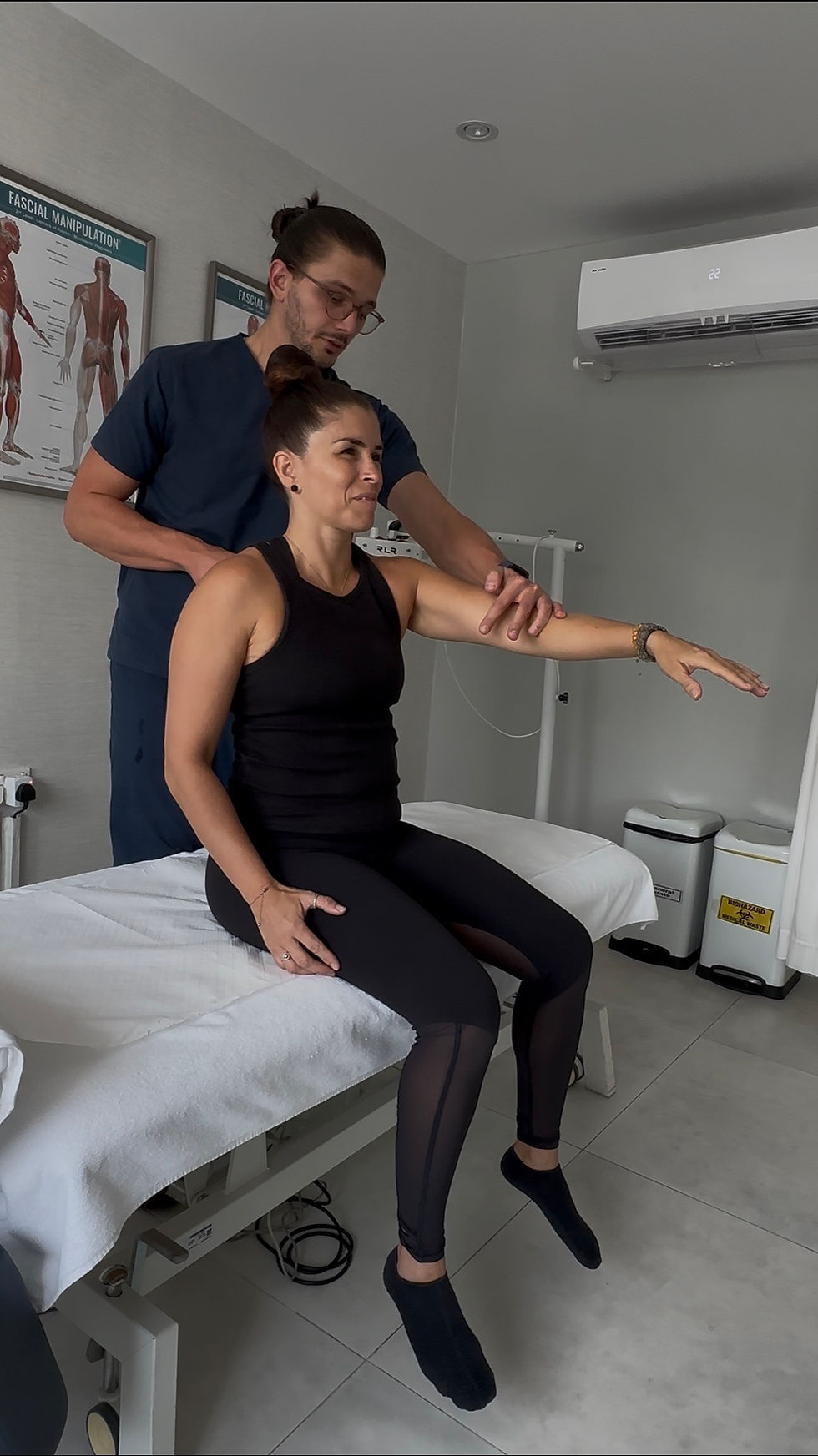
Fascia work: releasing the wrist, palm, forearm, elbow, chest and neck so the nerve has space and can glide.
Nerve gliding exercises: gentle movements that help the median nerve slide through its pathway.
Joint mobilization: improving movement of the small wrist bones and the neck and upper back.
Work and phone habits: keyboard height, mouse position, phone grip and regular breaks to reduce sustained wrist bending.
Strengthening: grip and forearm exercises once symptoms settle.
Carpal tunnel symptoms that start in pregnancy often ease in the months after birth, and physiotherapy can help manage them in the meantime.
When to see a doctor
Constant numbness, weakness, or wasting of the muscle at the base of the thumb means the nerve is under significant pressure. A medical review and a nerve conduction study can show how severe the compression is. Injections or surgery may be discussed in these cases, and rehabilitation after surgery helps restore grip and movement.
Wrist pain treatment in Dubai
A personalized assessment looks at the whole path of the nerve, not only the wrist. Physiotherapy in Jumeirah, Palm Jumeirah and across Dubai, with home physiotherapy available, including for new and expecting mothers.


Comments