Headaches that start in the neck (cervicogenic headache)

When Your Headache Comes From Your Neck
The headache always seems to start in the same place: a tight spot at the base of the skull on one side. From there it spreads over the head to the temple, the forehead or behind the eye. Turning the head towards that side feels restricted, and pressing on the top of the neck can bring the headache on. Long days at the screen, a long drive or a bad night's sleep make it worse.
This pattern is typical of a cervicogenic headache, a headache that originates in the neck. It is often mistaken for migraine or tension headache, and it can also overlap with them.
How a neck can cause a headache
The nerves from the top three segments of the neck enter the brainstem in the same area as the trigeminal nerve, the main sensory nerve of the face and head. Because these signals converge, the brain cannot always tell where they come from. Irritation in the upper neck can therefore be felt as pain in the head and around the eye.
Common sources include the small joints between the top vertebrae, the deep muscles at the base of the skull, and the occipital nerves, which pass through layers of muscle and fascia on their way to the scalp.
How it differs from other headaches
Cervicogenic headache: usually one-sided and stays on the same side, starts in the neck, comes with reduced neck movement, and is provoked by neck positions or pressure.
Migraine: often throbbing, with nausea, sensitivity to light or sound, and sometimes visual aura.
Tension-type headache: usually a pressing band around both sides of the head.
An accurate diagnosis matters, because the most helpful treatment differs.
What keeps it going
Often, the neck still carries the effects of something that happened years ago:
An old whiplash or fall: pain settled, but stiffness and reduced control in the upper neck remained.
Desk and phone habits: hours with the head forward compress the upper neck joints.
Weak deep neck muscles: the small stabilisers stop supporting the head, and the muscles at the base of the skull stay tense.
Jaw clenching: the jaw muscles and upper neck work closely together, and tension in one feeds the other.
Upper chest breathing and stress: both keep the neck muscles switched on.
Painkillers can help on bad days, but frequent use can itself lead to more headaches. If you need them on many days each month, speak to your doctor.
How physiotherapy can help
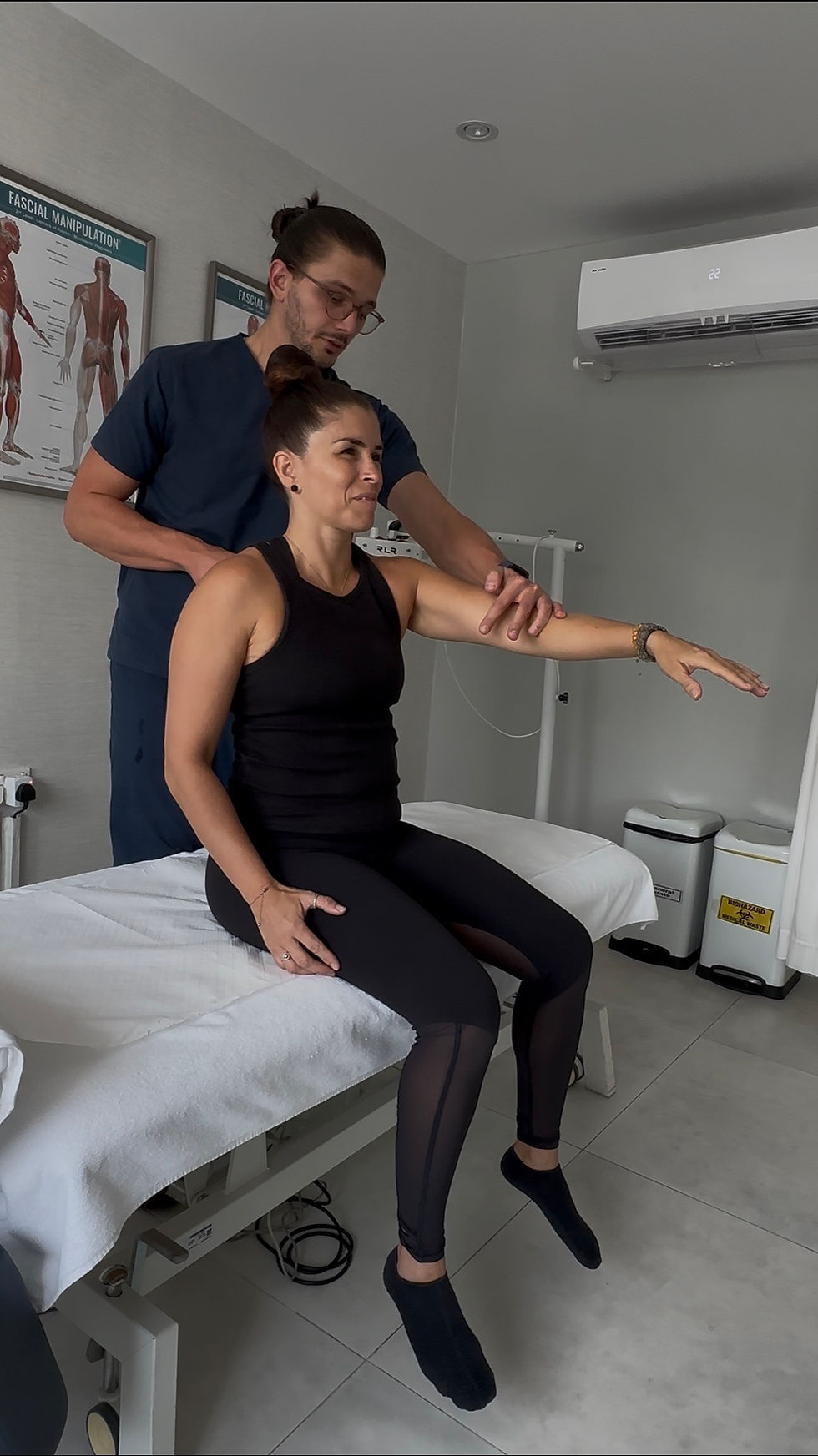
Manual therapy combined with specific exercise is a well-researched approach for cervicogenic headache. Treatment usually includes:
Manual mobilization of the upper neck: restoring movement in the joints at the top of the spine.
Fascia work: releasing the base of the skull, the area around the occipital nerves, the upper shoulders and the jaw muscles.
Deep neck muscle training: gentle, precise exercises that build support for the head.
Upper back and shoulder blade exercises: so the neck no longer carries the whole load.
Breathing and relaxation strategies: to lower background muscle tension.
A headache diary: to identify triggers and track progress.
When to seek urgent medical care
A sudden, severe headache, a headache with fever and a stiff neck, numbness, weakness, vision changes, slurred speech or confusion, a headache after a head injury, or a new headache pattern after the age of 50 needs urgent medical assessment, not physiotherapy.
Neck pain and headache treatment in Dubai
A personalized assessment helps confirm whether your neck is part of the picture. Physiotherapy in Jumeirah, Palm Jumeirah and across Dubai, with home physiotherapy available.


Comments