Frozen shoulder

Frozen Shoulder: Understanding the Phases and How Physiotherapy Helps
Frozen shoulder often begins quietly. A deep ache in the shoulder, worse at night, with no clear injury. Over the following weeks, movement starts to disappear: reaching behind your back, fastening a seatbelt, putting on a jacket or lifting the arm to a high shelf becomes difficult. Rotating the arm outward is usually the first and most limited movement.
The medical name is adhesive capsulitis. It affects around 2 to 5 percent of people at some point, most often between 40 and 60, and more often women. It is more common in people with diabetes or thyroid conditions, around menopause, and after a period of immobilisation such as surgery or a fracture.
What happens inside the shoulder
The shoulder joint is wrapped in a capsule, a sleeve of connective tissue that normally has plenty of slack. In frozen shoulder, the capsule becomes inflamed, then thickens and contracts. The space inside the joint shrinks, and the ball can no longer move freely.
The rest of the body responds. Muscles around the shoulder guard the joint, the fascia of the chest, armpit and shoulder blade tightens from lack of movement, and the neck and upper back start doing extra work. The nervous system becomes more protective, so even small movements can feel threatening and painful.
The three phases
Frozen shoulder usually follows a typical course, although the timing varies:
Freezing: pain is the main problem, especially at night. Movement starts to reduce. This often lasts two to nine months.
Frozen: pain eases, but stiffness dominates. This can last four to twelve months.
Thawing: movement gradually returns over several months to two years.
Without treatment, the full cycle can take one to three years, and a notable number of people are left with some long-term stiffness.
Why forcing it doesn't help
In the painful phase, aggressive stretching often makes the shoulder flare, because the inflamed capsule and protective nervous system react to the threat. Doing nothing isn't ideal either, because disuse lets the surrounding tissues stiffen further. The skill lies in matching treatment to the phase.
How physiotherapy can help
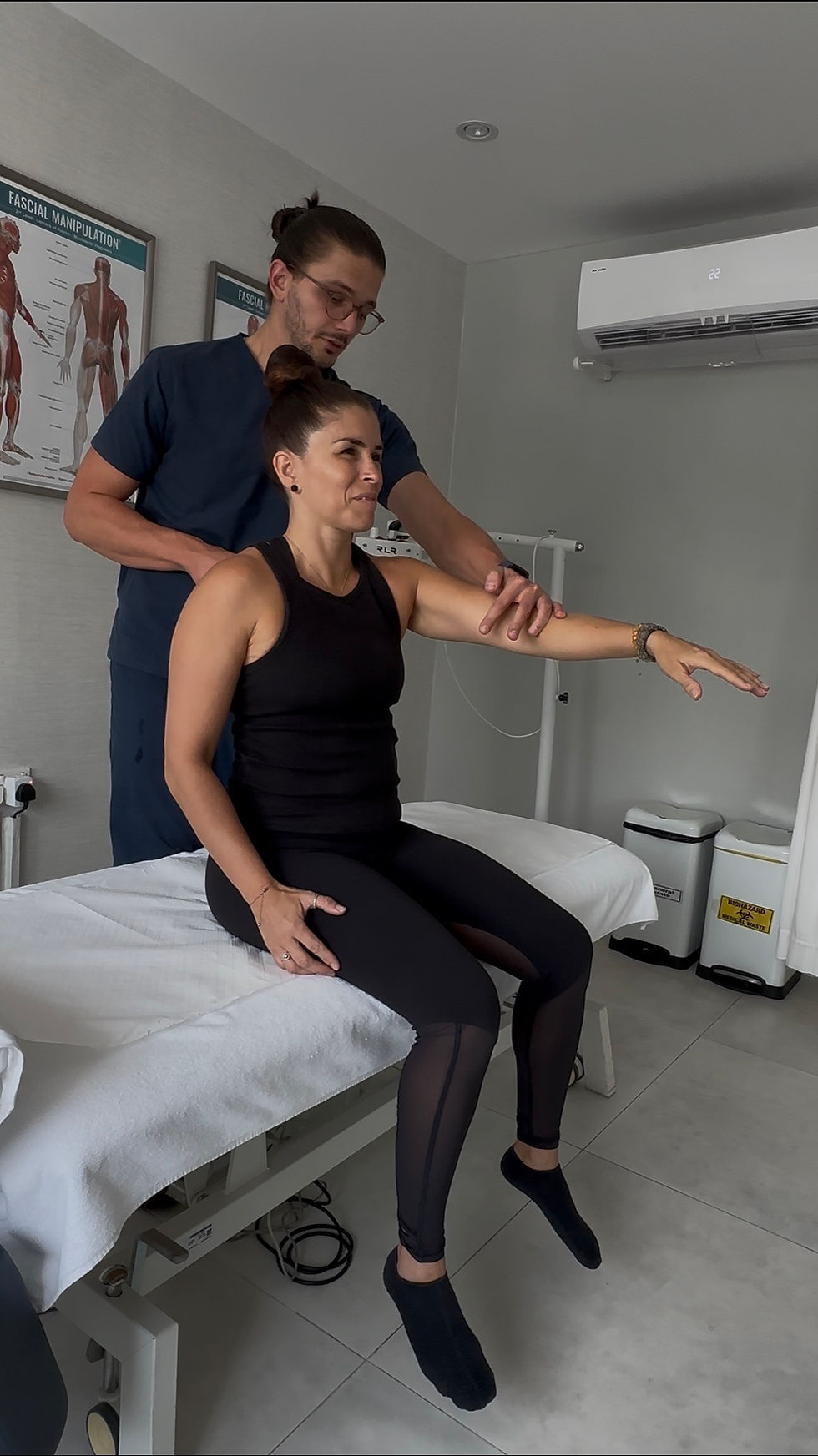
Painful phase: gentle, pain-free movement, positions that ease night pain, and work to calm the nervous system, including breathing and light manual therapy away from the sore joint. Your doctor may also discuss an injection to reduce inflammation, which is often combined with physiotherapy.
Stiff phase: manual mobilization of the shoulder joint and fascia work around the shoulder blade, chest, armpit, neck and upper back, so the surrounding tissues stop adding to the restriction.
All phases: progressive exercises little and often, from assisted movements to strengthening as range returns, and breathing retraining to reduce protective tension in the neck and shoulders.
Thawing phase: restoring strength and confidence for daily tasks, work and sport.
For shoulders that stay very stiff despite rehabilitation, doctors may discuss procedures such as hydrodilatation or surgical release. Rehabilitation remains important afterwards.
Getting the diagnosis right
Several other conditions, including arthritis, calcific tendinitis and rotator cuff tears, can look similar. A thorough assessment, and sometimes an X-ray or scan, helps confirm what is going on before treatment begins.
Frozen shoulder rehabilitation in Dubai
Early assessment helps you understand which phase you are in and what your shoulder needs now. Physiotherapy in Jumeirah, Palm Jumeirah and across Dubai, with home physiotherapy available for the months this condition can take.


Comments