Tech neck

Tech Neck: Why Your Neck Hurts by the End of the Day
It builds slowly. By mid-afternoon the neck feels stiff, the area between the shoulder blades aches, and a dull headache starts at the base of the skull. By evening, turning to reverse the car is uncomfortable. A weekend away helps, then Monday brings it all back.
In Dubai, long office hours, commutes along Sheikh Zayed Road and constant phone use make this one of the most common reasons people look for neck pain treatment.
What changes when you look down
The head weighs around five kilograms. When it sits balanced over the shoulders, the neck carries it with little effort. As the head moves forward and down towards a laptop or phone, biomechanical models estimate that the load on the neck muscles rises several times over. Those muscles then have to work constantly to stop the head from dropping further.
Posture isn't the real enemy
It is tempting to blame "bad posture", but research shows only a weak link between posture itself and neck pain. Many people with a forward head have no pain. What matters more is how long you stay in one position, and how well your body is prepared for it. As the saying goes, your next posture matters more than your current one.
What builds up over months of desk work
Stiff fascia: the connective tissue across the back of the neck, the front of the chest and the upper back adapts to the shortened position and loses its glide.
Switched-off deep neck muscles: the small muscles that support the neck from the front weaken, while the larger muscles at the top of the shoulders and back of the neck overwork.
A stiff upper back: the thoracic spine stops extending and rotating, so the neck moves more to compensate.
Upper chest breathing: with a rounded posture and stress, breathing moves from the diaphragm to the upper chest. The neck muscles then help with every breath, around 20,000 times a day.
Jaw tension: clenching during focused work adds load to the muscles linking the jaw, head and neck.
Stress and poor sleep: both raise muscle tension and make the nervous system more sensitive to pain.
Massage, heat and painkillers can ease the tension, and they have a role. But if the desk habits, breathing pattern and muscle balance stay the same, the tension tends to return by the next afternoon.
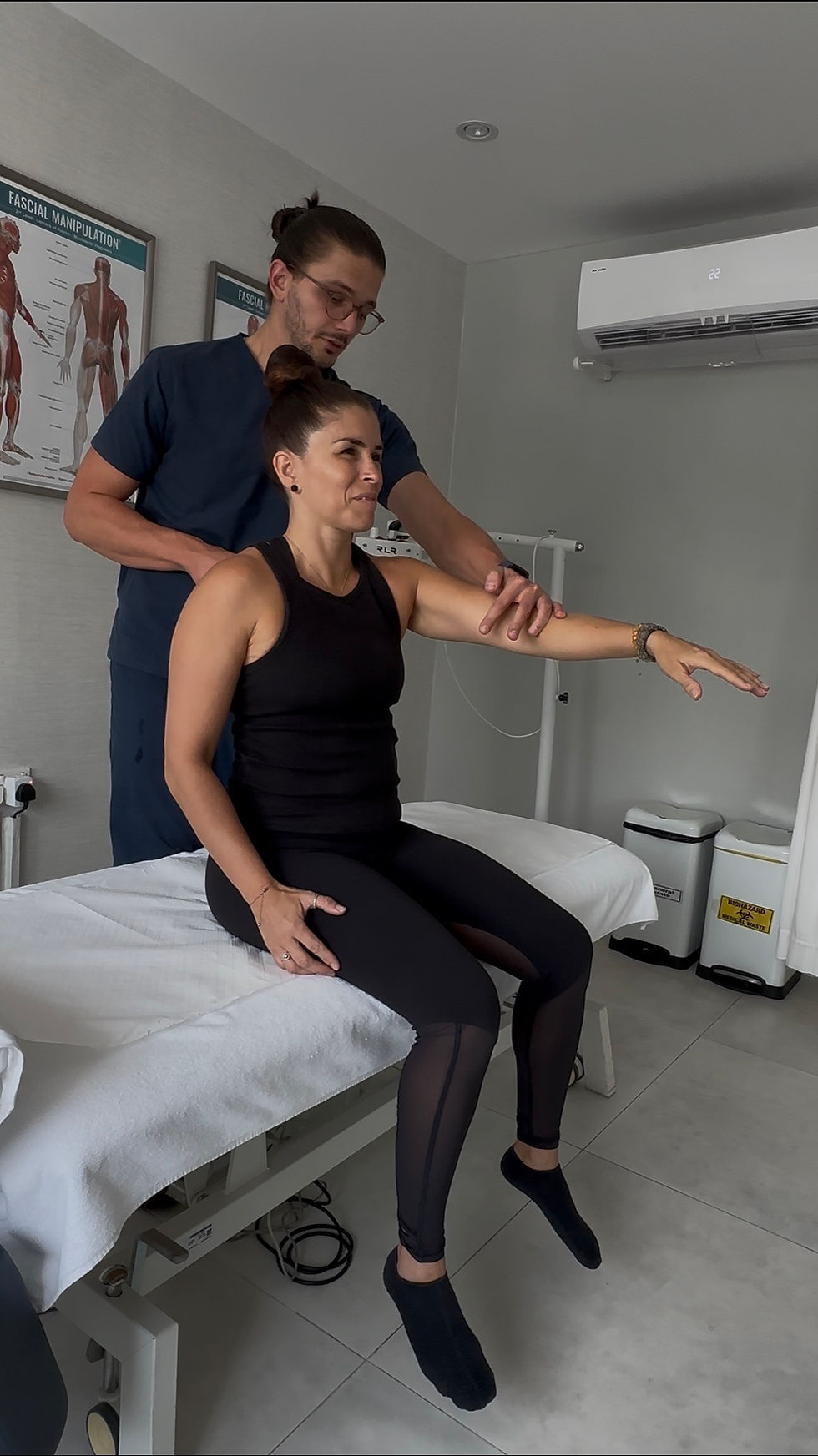
How physiotherapy can help
Manual mobilization: restoring movement in the neck, upper back and ribs.
Fascia work: releasing the back of the neck, the chest, the shoulders and, where needed, the jaw.
Targeted exercises: deep neck flexor training, upper back extension and rotation, and shoulder blade control.
Breathing retraining: returning breathing to the diaphragm so the neck can stop working with every breath.
Practical changes: screen at eye level, a laptop stand with a separate keyboard, the phone raised towards eye height, and a pillow that supports the neck at night.
Movement breaks: a short change of position every 30 to 45 minutes, which often helps more than any single exercise.
When to see a doctor first
Neck pain after a fall or car accident, increasing weakness or numbness in the arms, problems with balance or coordination, fever, unexplained weight loss or severe pain at night need medical assessment before physiotherapy.
Neck pain treatment in Dubai
A personalized assessment shows which factors drive your neck pain and what to change first. Home physiotherapy in Dubai means the assessment can include your actual desk and workspace. Physiotherapy in Jumeirah, Palm Jumeirah and surrounding areas.


Comments