Tattoos Can Cause Chronic Pain Through Nervous System Irritation and Fascia Disruption
A tattoo is an injury by design. Most heal well. Some do not. When pain stays after the skin has healed, the cause may sit deeper than the ink.
This post is for information only. It does not replace medical care.

A tattoo can irritate the nervous system
Tattoo needles puncture the skin many times. That process can irritate small nerves in the skin and the tissue below it.
For most people, the nerves calm down as the tattoo heals. For others, the area stays sensitive. The nervous system keeps sending warning signals even after the original tissue damage has settled.
This can feel like:
Burning
Tingling
Sharp zaps
Deep aching
Pain from light touch
Tightness around the tattoo
This does not mean the tattoo artist did something wrong. It means the body may have stayed in a protective state for too long.
Pain is an alarm signal. The problem starts when the alarm keeps ringing after the danger has passed.
Fascia can become tight or disrupted
Under the skin sits fascia. It is a thin connective tissue layer that wraps around muscles and helps structures glide smoothly.
A tattoo can affect this layer, especially when it is large, heavily shaded, placed over a joint, or worked over for many hours.
When fascia does not glide well, movement can feel restricted. The body may then change how it moves to avoid discomfort. Over time, this can load nearby muscles and joints.
For example, a tattoo across the shoulder may feel tight when raising the arm. A tattoo on the ribs may feel sore with deep breathing or twisting. A tattoo near the ankle may change how the foot moves during walking.
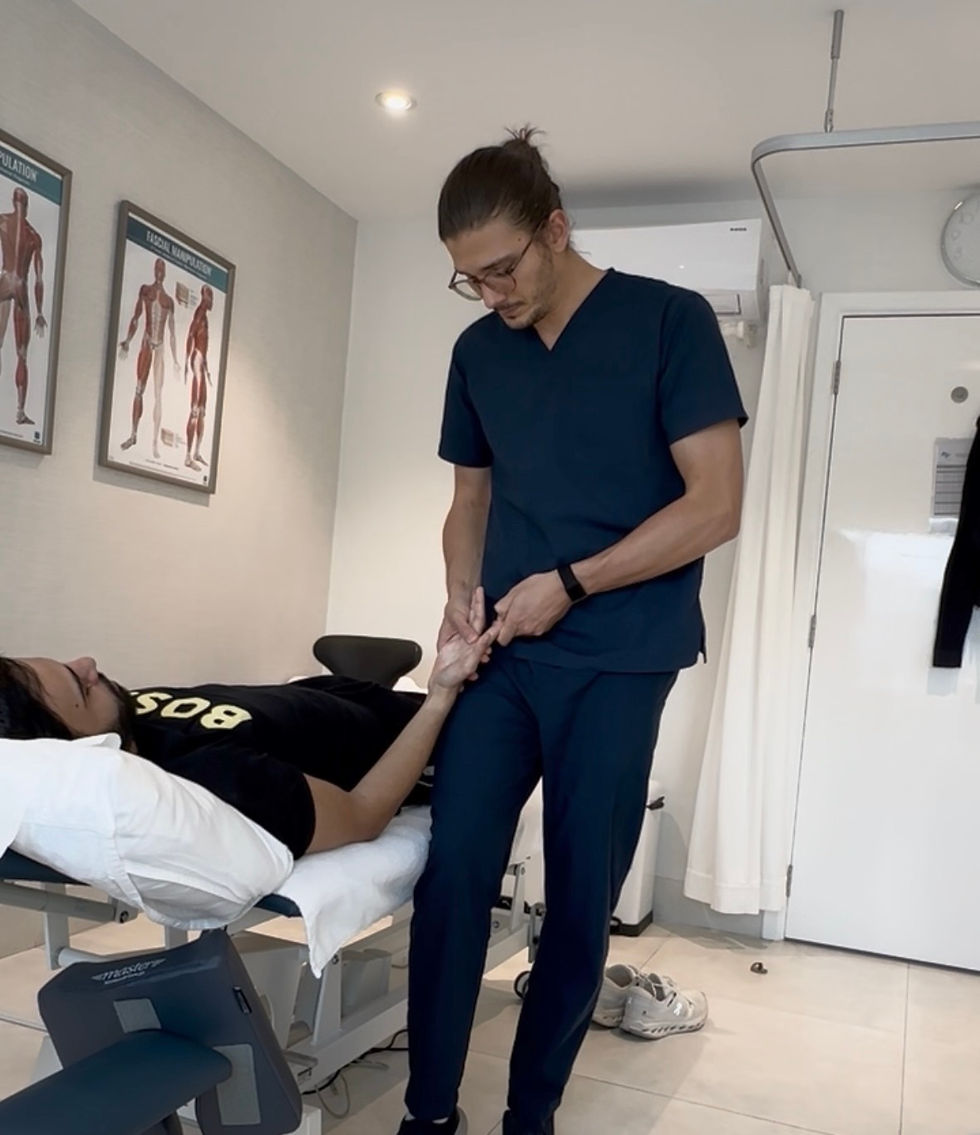
This is where fascia, physical therapy work, and skilled hands-on assessment can help identify whether the pain comes from skin sensitivity, tissue stiffness, or altered movement.
Chronic pain can spread beyond the tattoo
Pain does not always stay in one spot. If the nervous system stays irritated, nearby areas may become sensitive too.
A tattoo on the upper back may lead to neck tightness. A hip tattoo may link with lower back discomfort. A calf tattoo may affect how the knee or foot feels.
This can happen because the body protects the painful area. Muscles tighten. Movement changes. Sleep may suffer. Stress can raise sensitivity further.
That cycle can turn a local tattoo issue into chronic pain.
If the skin looks healed but pain continues for weeks or months, the issue may be sensitivity, scarring, fascia stiffness, or movement changes.
In Dubai, heat, sweat, and tight clothing can also keep a healing tattoo irritated. Clean aftercare matters, but long-term pain needs a wider look.
People often search for chronic pain, physio dubai, physiotherapy dubai when the pain has lasted too long. The key is to find someone who checks the tattooed area, the surrounding joints, and how the body moves as a whole.
What can help
The right approach depends on the cause. A careful assessment comes first.
Helpful options may include:
Gentle movement to restore glide
Soft tissue work around, not aggressively on, the tattoo
Nerve calming exercises
Breathing work for rib or trunk tattoos
Gradual loading of stiff areas
Advice on clothing, heat, and friction
Avoid harsh scraping, deep pressure, or aggressive stretching over a painful tattoo. More force can make a sensitive nervous system louder.
The takeaway
A tattoo can cause lasting pain when the nervous system stays irritated or the fascia loses normal movement. This is not common, but it is real.
If pain remains after the tattoo has healed, do not push through it. Look at the skin, the nerves, the fascia, and the way the area moves. The earlier the cycle is addressed, the easier it is to calm down.


Comments