Neck Pain After a Car Accident: Why It Can Linger
Updated: 6 days ago
After a minor car accident, neck pain and stiffness can appear the same day or creep in a day or two later. When it lingers for weeks, people understandably start searching for answers.
The neck holds layers of muscle and fascia that respond quickly to a sudden jolt by tightening to protect the area. In the short term that’s exactly what should happen. The trouble comes when the nervous system stays in that heightened protective state long after the tissues have settled, keeping the neck guarded, stiff and sensitive.
This is why scans often come back clear while the pain remains very real. The issue is a system stuck in protection mode, not ongoing damage — and reassurance alone doesn’t switch it off.
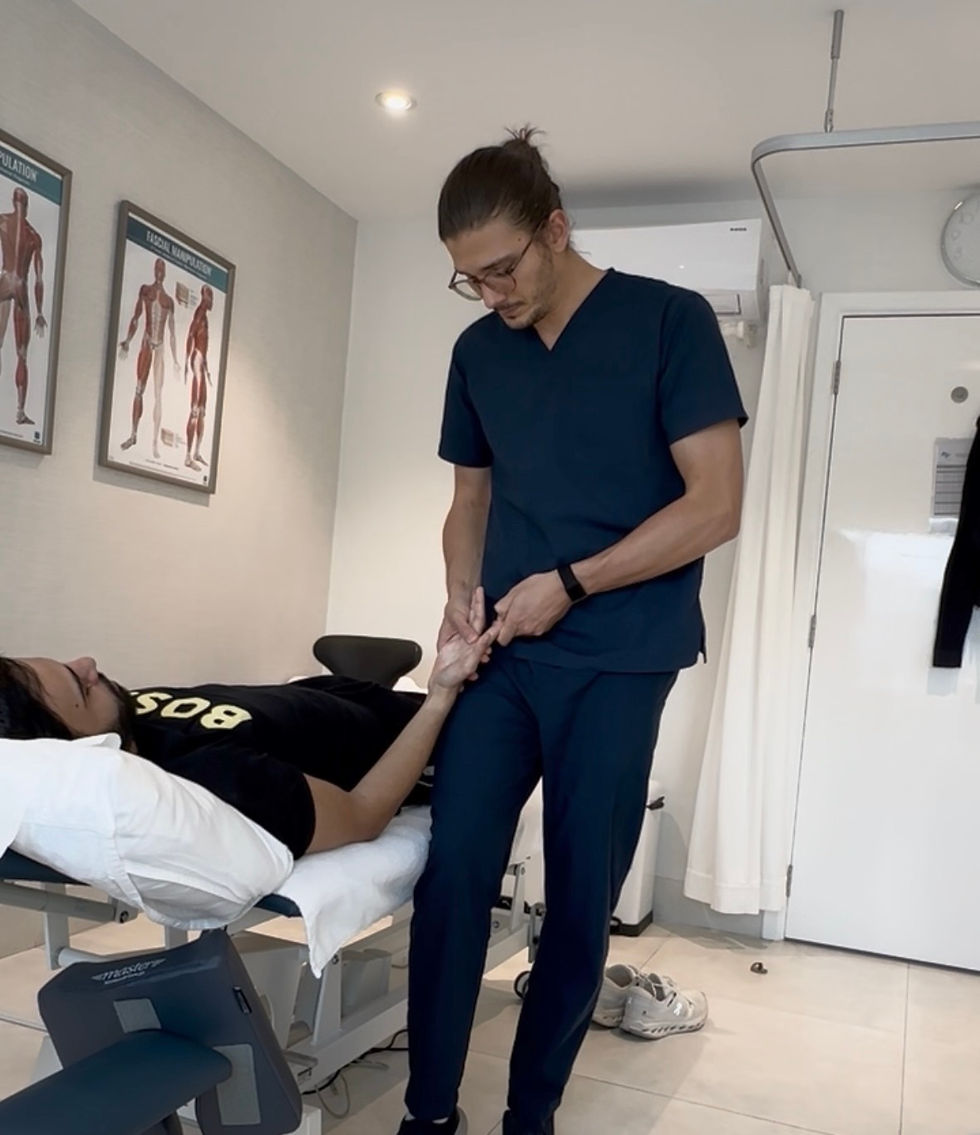
Rehabilitation focuses on gently restoring neck mobility at a pace the nervous system accepts, releasing fascial restriction, and gradually rebuilding trust in movement. Pushed too hard, a guarded neck protects harder; done gradually, it settles.

A jolt can also unsettle balance. The upper neck constantly tells the brain where the head is, working alongside the inner ear and the eyes. After a whiplash-type injury that information can become less reliable, leaving some people dizzy, unsteady, or uncomfortable with quick head turns and busy screens. Vestibular and eye–head coordination exercises retrain these
systems to work together again — keeping the gaze steady while the head moves, improving balance and sharpening the neck’s sense of position. Dizziness after an accident should always be assessed first, as it can also come from concussion or the inner ear.
Every recovery timeline differs, and a personalized assessment helps guide it. We offer home physiotherapy and rehabilitation for neck pain and musculoskeletal conditions across Dubai — physiotherapy in Dubai, physio Dubai.


Comments