Shoulder Pain That Keeps Coming Back: Why Physiotherapy Sometimes Stalls
Updated: 2 days ago

Many people seeking physiotherapy in Dubai for shoulder pain have already tried electrotherapy, deep tissue massage, or dry needling. These treatments often bring relief, and then the pain returns. Why?
Usually not because the treatment was wrong, but because it was used alone. Treating the tight, painful muscle addresses the symptom. The bigger question is why the nervous system decided to protect that area in the first place.
A pattern I see often
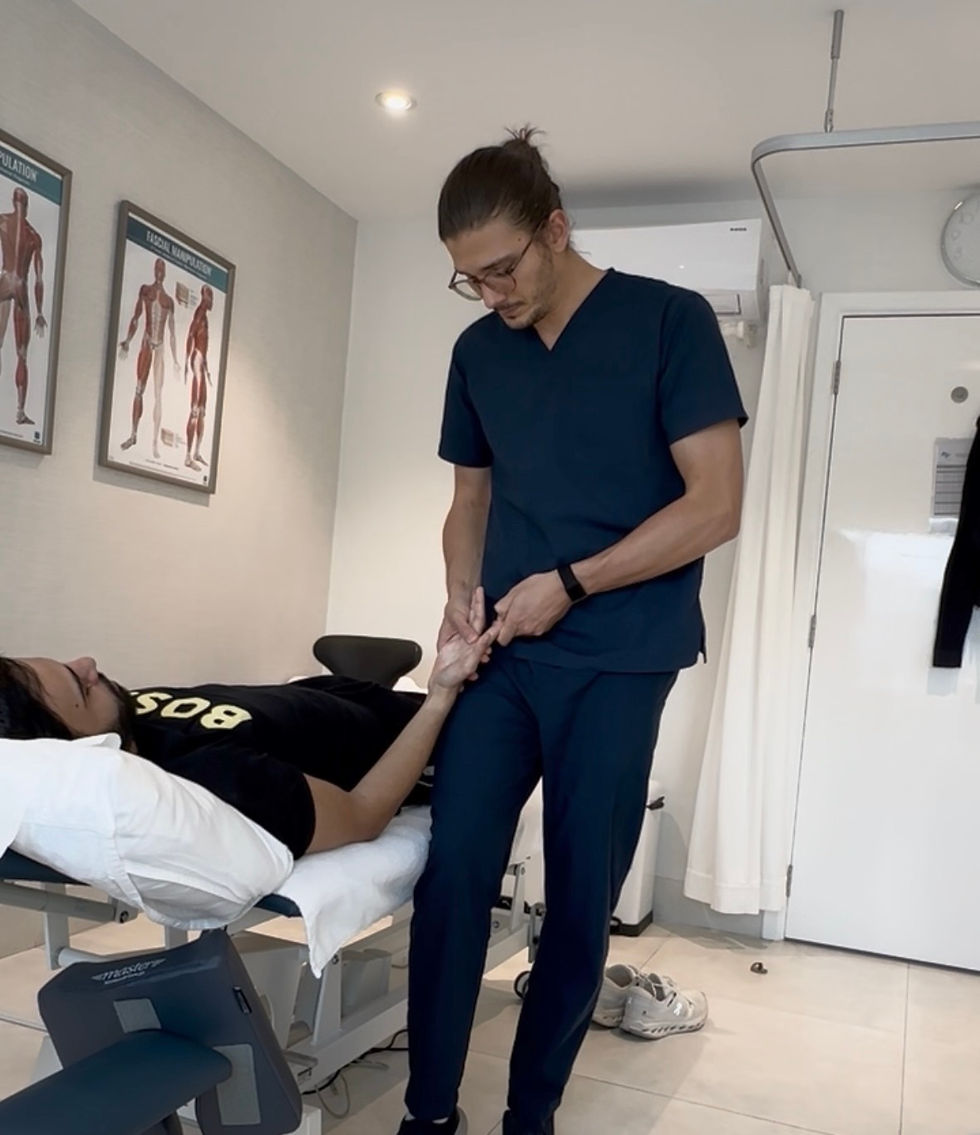
Here's a pattern I see often in my physiotherapy practice in Jumeirah: a client comes in with chronic shoulder pain, but years earlier they fractured a wrist on the same arm. The fracture healed. But the nervous system never fully "reset" its protective guarding of that limb. Movement patterns changed subtly: how they reached, pushed, and carried weight. Over time the shoulder compensated, fascia tightened, and pain emerged with no obvious recent cause.
The wrist is only one example. Other common starting points include:
an old elbow injury on the same side
surgery scars on the chest, abdomen or shoulder
a neck injury or whiplash
a period of immobilisation in a sling or cast
In physiotherapy this idea has a name, regional interdependence: a problem in one region can drive symptoms in another.
Where the usual tools fit
Electrotherapy can calm pain temporarily. Massage releases tight tissue. Dry needling can reduce local sensitivity and muscle tension, and I use it myself when it fits the case. These are useful tools. The problem starts when they are the whole plan. If nobody asks why the muscle is still guarding, it will usually tighten up again once the effect wears off.
Why the scan doesn't always explain the pain
Many people arrive with an MRI report listing tendinopathy, a partial tear or bursitis. These findings matter, but they don't always explain the pain. Studies of people with no shoulder pain at all regularly find similar changes on imaging. In one well-known study, about a third of pain-free adults had rotator cuff tears on MRI. The scan shows structure. It doesn't show how the shoulder is being controlled, or what the nervous system is protecting.
What the assessment looks like
My approach focuses on the nervous system and fascia, and it starts with a thorough, personalised assessment:
Full history. Old injuries, fractures, surgeries and scars, including ones you might think are unrelated.
Movement testing. How the shoulder, shoulder blade, neck and arm move together, not just the painful joint.
Fascia and sensitivity. Checking the tissue along the whole arm and trunk for restricted or oversensitive areas.
Retesting. Checking whether changing one area immediately changes the shoulder. If treating an old wrist or scar changes your shoulder movement in the same session, that tells us something important.
Treatment then combines fascial manual therapy, nervous-system-focused techniques, tools like dry needling or shockwave where they help, and a progressive exercise plan. The exercises are what make the change last.
When to see a doctor first
Shoulder pain isn't always a shoulder problem, and some causes need medical attention before physiotherapy. See a doctor promptly if your shoulder pain:
comes with chest pain, shortness of breath or sweating (seek emergency care)
follows a fall with deformity, or you can't lift your arm at all
comes with fever or a hot, swollen joint
is constant at night regardless of position, or comes with unexplained weight loss
sits at the right shoulder tip and gets worse after meals, which can point to the gallbladder
comes with spreading numbness, pins and needles or weakness in the arm
Where I see patients
I see patients at Adria Medical Center, Villa 783 Jumeirah Street, Umm Suqeim 2, and offer home physiotherapy visits across Jumeirah and nearby areas. I work with chronic and recurring shoulder pain, frozen shoulder, rotator cuff problems, impingement, and rehabilitation after shoulder surgery.
Łukasz (Lucas) Birycki, MSc Physiotherapy, DHA-licensed physiotherapist. Certified in Fascial Manipulation (Stecco Institute, Padova).
References: Sher JS et al. Abnormal findings on magnetic resonance images of asymptomatic shoulders. J Bone Joint Surg Am. 1995;77(1):10–15. Wainner RS et al. Regional interdependence: a musculoskeletal examination model whose time has come. J Orthop Sports Phys Ther. 2007;37(11):658–660.
This post is for information only and doesn't replace an individual medical assessment.


Comments