Chronic ankle instability: nervous system perspective
A "weak" ankle after a sprain isn't always about loose ligaments — often it's lost communication between the joint and the nervous system.
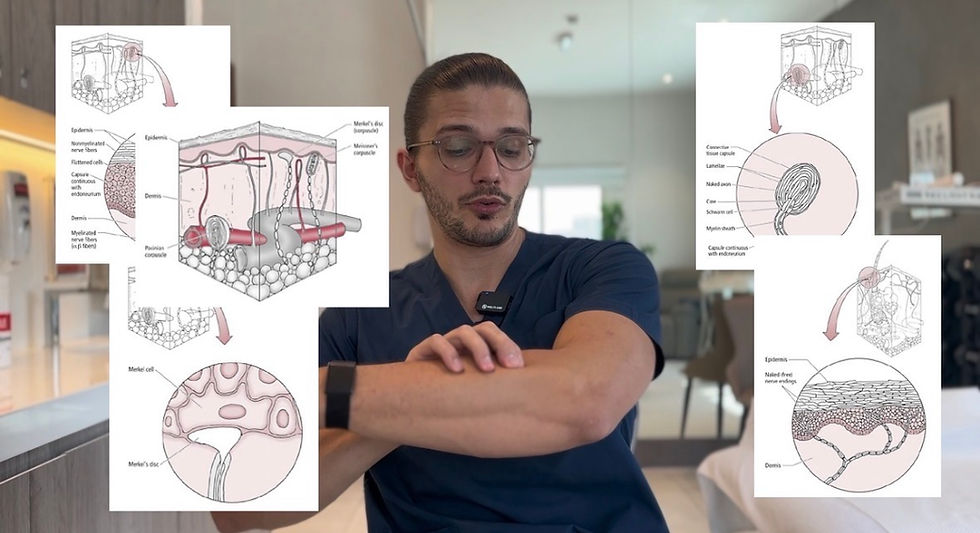
Injured ligaments don't just lose mechanical strength — they're packed with sensory receptors that tell the brain where the ankle is in space. When a ligament tears, that feedback is disrupted, so even after the tissue heals, the ankle can still feel unstable.
Injured fascia around the ankle adds to this — scar tissue and restricted fascia change how movement and position are sensed locally, reducing signal quality to the brain.
There's also a behavioral piece: after repeated sprains, the nervous system can start to "neglect" the area — shifting weight away, reacting slower to instability, relying more on the other leg. This protective pattern often outlasts the injury itself.
That's why lasting stability needs more than strengthening — it needs to retrain how the nervous system senses and reacts through the joint, alongside releasing restricted fascia and scar tissue.
Personalized home physiotherapy, manual therapy and rehabilitation for ankle instability and musculoskeletal conditions across Dubai, including Palm Jumeirah. Licensed doctors, nurses and physiotherapists — physiotherapy in Dubai, physio Dubai, physiotherapy in Jumeirah.


Comments